The challenge
Street marketing agencies face a unique visual challenge: their brand appears simultaneously on massive outdoor formats (billboards, building wraps, vehicle branding) and on small digital screens (Instagram posts, email signatures, presentation decks). Most agency brands fail in one of these two contexts.
The client's existing visual presence had no consistency. Different team members used different color values, different logo files, and different fonts depending on what was available. The result was a fragmented brand perception that undermined the agency's core promise: creating visual impact for their clients.
Our approach
We started with an audit of all existing brand touchpoints — collecting every variation of their existing assets. The audit revealed 4 different logo files in use simultaneously, 3 conflicting blue values, and no documented typography rules.
From this baseline, we built a comprehensive brand system from the ground up, prioritizing scalability and clarity. Every design decision was tested at both micro and macro scale before being included in the guidelines.
What we delivered
- Brand story: positioning, mission, and core values (documented for the first time)
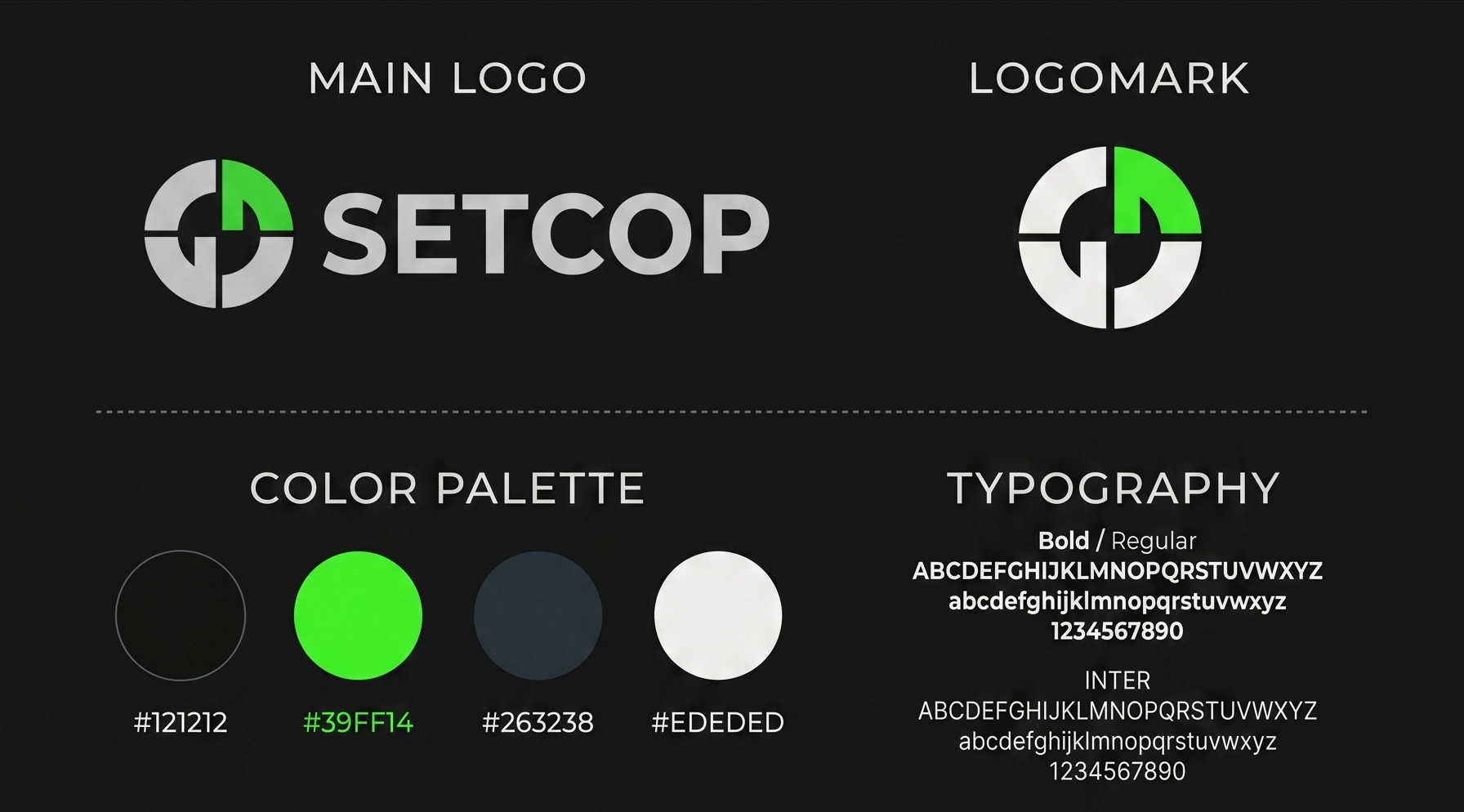
- Logo system: primary mark with 6 variants — full color, reversed, monochrome, horizontal, stacked, and minimal icon
- Color system: 2 primary colors + 4 secondary colors + 2 neutral tones, with all values in HEX, RGB, CMYK, and Pantone
- Typography: 2-font system with H1-H6 hierarchy, body, caption, and UI application rules
- Graphic elements: custom pattern, divider styles, and photography direction
- Application examples: business card, letterhead, presentation template, social media kit, outdoor format mockups
- Do's and don'ts: 8-page section documenting all incorrect usage scenarios
The result
The agency now presents a unified, professional visual identity across all touchpoints. The guidelines document is distributed to every new freelancer and partner, eliminating the off-brand content problem that had existed for years. The brand system was designed to be maintained without continuous design input — the client's team can apply it independently.